About Dominic Boyer

I started dancing when I was 10.

In Quebec, dancing was part of our life. At family gatherings, music was often in the room: folklore, jig, spoons, violin, singing and people dancing together. In some songs, the singer carries a line and the group responds. Voice, rhythm, hands, feet and bodies become part of the same shared moment.

That is one of the first places dance lived for me: in the room, in the music, in the people, in the call and response, and in the joy of moving together.

Long before I had formal names for technique, choreography, musicality, lead and follow, dance had already shown me music, connection, expression and aliveness.

Move • Connect • Come Alive.

Dominic Boyer, founder and private dance teacher at DBoyerDance

Dance Training and Teaching Experience

Dance continued through training, social dancing, performance, competition and teaching.

I began teaching around 2000. Early in my teaching career, I trained and worked as a dance teacher at a major dance school in Montréal, QC and Coquitlam, BC. That experience gave me structured teacher training in ballroom and partner dancing, alongside the daily practice of teaching people with different goals, bodies and ways of learning.

My development continued through private coaching, workshops, social dancing, performance, competition and years of teaching. I founded DBoyerDance in 2007.
Today, I teach private dance lessons and Wedding First Dance lessons in my Mount Pleasant studio in Vancouver.

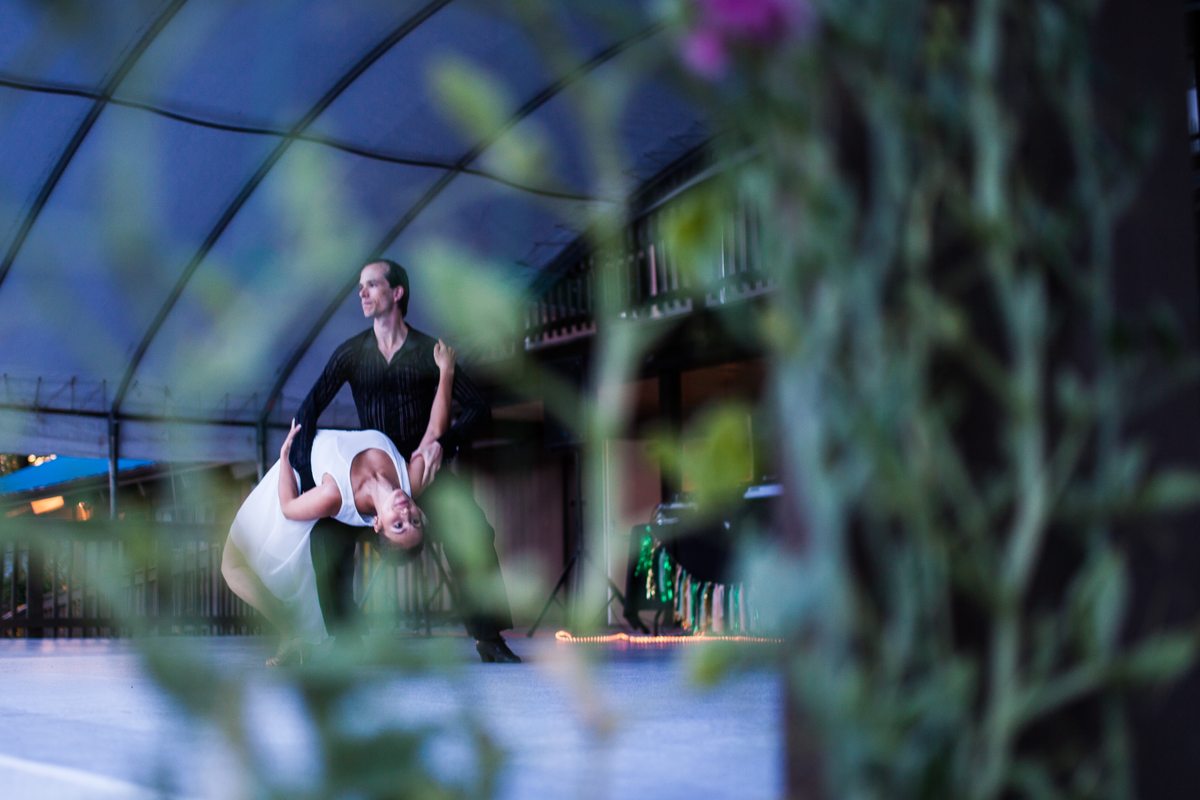
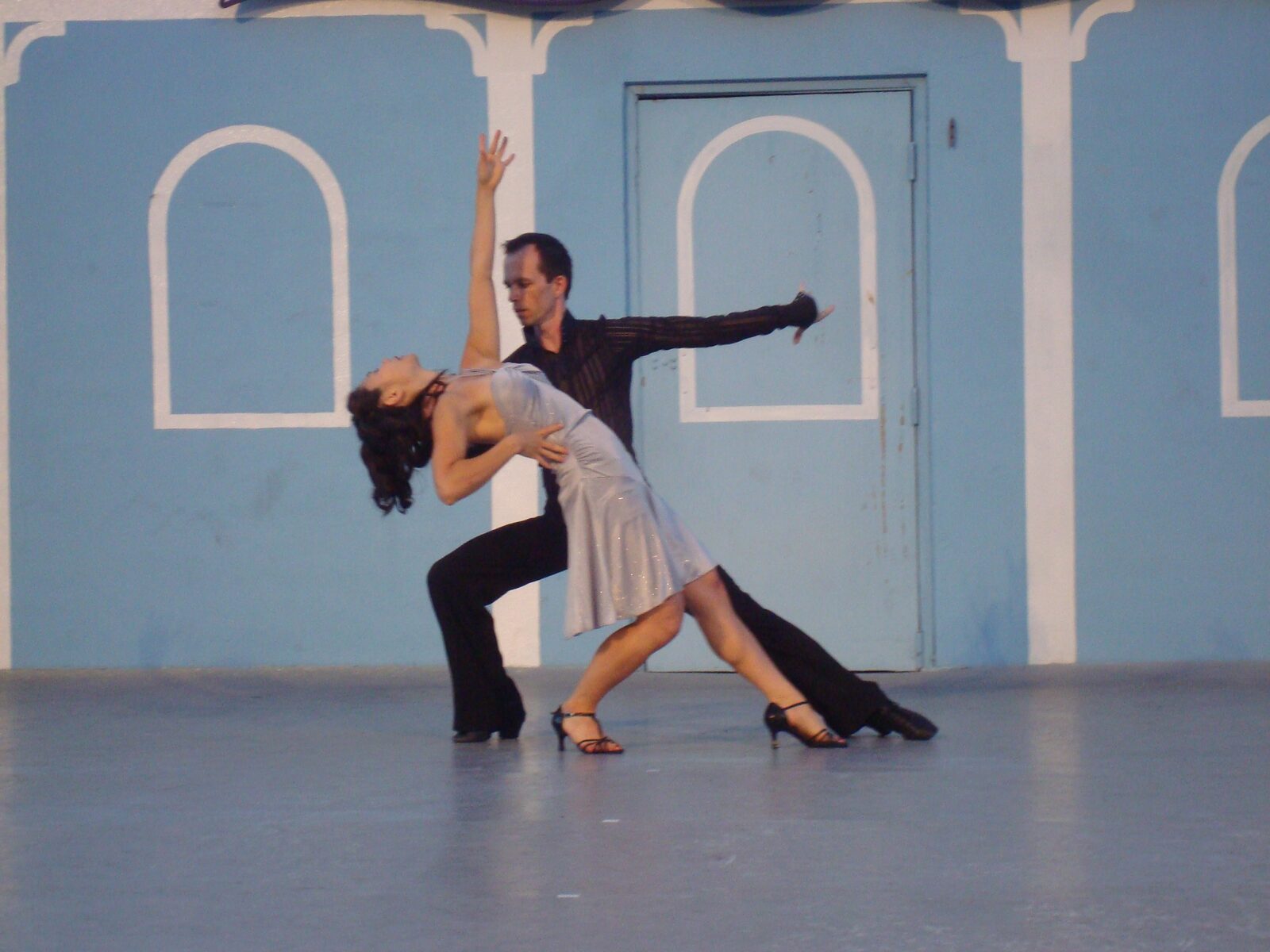
Dominic Boyer and a partner performing together

Dance may look simple from the outside: a step, a turn, a rhythm, a pattern, a song. Inside the lesson, the student is learning weight shift, timing, balance, direction, memory and music. With a partner, attention also moves through invitation, response, connection and recovery when a movement changes.

Read more about how I teachShow less

Inside a Dance Lesson

No two students bring the same body, history, rhythm, instinct or way of learning. One student finds clarity through technical explanation. Another needs to see the shape, feel the movement, repeat it, use imagery, take on a stronger challenge, or have a quieter moment so the body can continue what it has started.

The route changes with the learning. I might demonstrate, count, simplify, exaggerate, use rhythm or imagery, separate two partner roles, or become very precise about weight, direction, timing, frame and transition.

I do not have the way. I have a way.

Every student brings a different way into the dance, so the route has to stay alive.
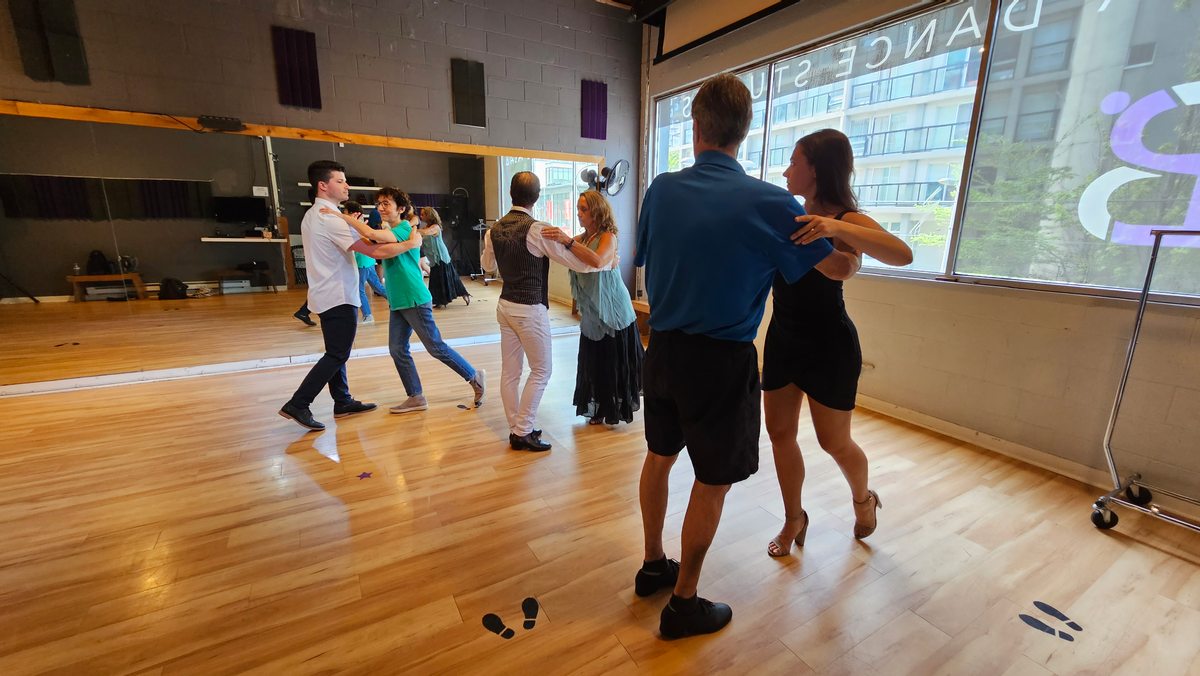
Dominic Boyer performing partner dance

“Not only is he a patient, engaging and truly encouraging teacher, but he has an amazing ability to add the physical movement and the social signaling necessary for a truly fluid partnership dance. … His knowledge of music to complement the dance experience is also an amazing gift.”

— Ian W.

When the Dance Settles in the Body

The mind may understand a movement before the body can dance it. Repetition turns a count or an idea into timing, ease and movement.

The body learns through experience: doing, adjusting, losing the movement, finding it again, hearing the music, feeling the partner, making mistakes and recovering. At first, effort helps create a reference. As the movement becomes familiar, the student no longer needs to hold every piece with the same effort.

That is one of the beautiful parts of teaching: watching movement travel from the head into the body until the student begins to dance it.

Mistakes sometimes give us gold. A turn changes shape or a transition opens another possibility. We keep it, play with it and let the student’s movement become part of the choreography.

A mistake is a creation in disguise. That is where the dancer becomes part of the painting with me.

Partner Dancing, Music and Choreography

Partner dancing is a conversation through the body. Information travels between two dancers through timing, tone, direction, weight, breath, attention and movement. The lead initiates and offers direction; the follow receives, responds, redirects and shapes what happens next.

When that exchange grows clearer, the dance feels less like two people remembering separate instructions and more like a language developing between them.

Music changes that language. Pulse, phrasing, accents, pauses, builds and releases give the movement places to breathe, soften, gather or expand. Choreography shapes those moments around the person, the couple, the song and the movements we discover together.

The result might be playful, romantic, elegant, dramatic, expressive or full of wow. When the choreography belongs to the people dancing it, it begins carrying something of them.
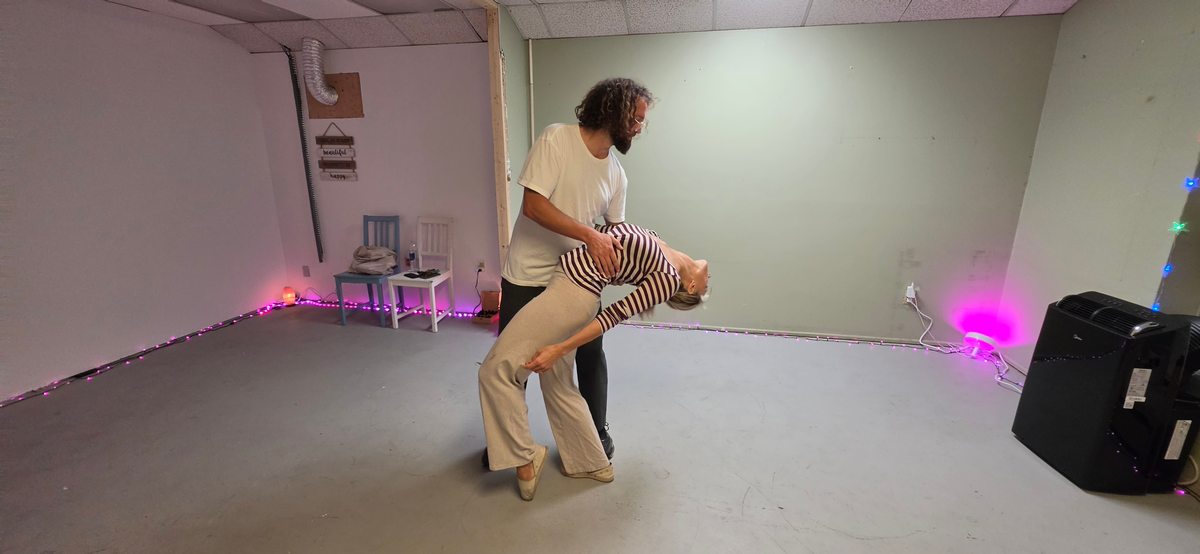
Dominic Boyer and a partner moving through choreography

“Dominic gave me a great tip on how to manage my core muscles when leaning and dipping in Tango that has really improved my dance and my connection with my partner! I was struggling and not understanding why the move wasn't working, and he worked with me until I got it!”

— Stacy H.

Presence, Connection and Transformation

Transformation is part of DBoyerDance because it happens through the dancing.

I see it in the way a person begins to move, listen and respond. A beginner starts to feel that dance is possible. A student hears more in the music and finds more expression in the body. Two partners discover greater clarity in the way they invite, receive and answer movement.

These moments grow inside the practice: movement, music, repetition, partner response, mistakes, laughter and discovery. They are not separate from technique. They appear as the technique becomes lived experience.

Move • Connect • Come Alive is not a straight line. Movement opens connection. Connection changes the movement. Presence gives expression more room. The dance continues moving through all three.

My Wider Background

Movement has been part of my life in more than one form. When I was younger, I practised martial arts and reached blue belt. Later, my studies included Reiki, meditation and Shiatsu massage therapy.

A large part of my path was shaped by l’Institut du Développement de la Personne—IDP—and the teaching of Annie Marquier. Over roughly ten active years, I participated in workshops, coaching, facilitator training, coordination, personal development and spiritual development through the institute.
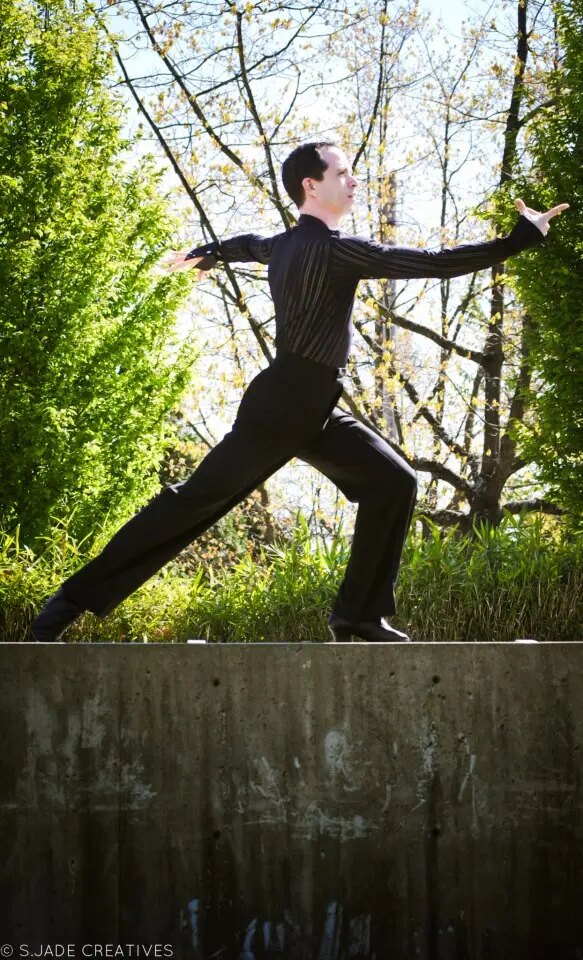
That background informs how I observe, listen, guide movement and meet the person in front of me. A dance lesson remains grounded in dance: movement, music, technique, timing, choreography and partner connection.

Students have often told me, “Dominic, you are teaching way more than just dancing.” I understand why they say it. Dance works through the whole person who is learning it.

Dominic Boyer in an artistic dance performance
Portrait of Dominic Boyer

The Studio

DBoyerDance lessons take place in a private studio in Mount Pleasant, Vancouver, with one lesson at a time and the dance floor at the centre.

I want students to feel that the studio is their place too. From the moment we enter, I want it to feel like stepping into another world: a magical world where dance is expressed, the body wakes up, the soul has room to sing, and students can bring that energy home with them.

Music, movement, colour and attention create an atmosphere apart from the rest of the day. A lesson might move from technical detail into play, from repetition into laughter, or from a wrong turn into a discovery worth keeping.
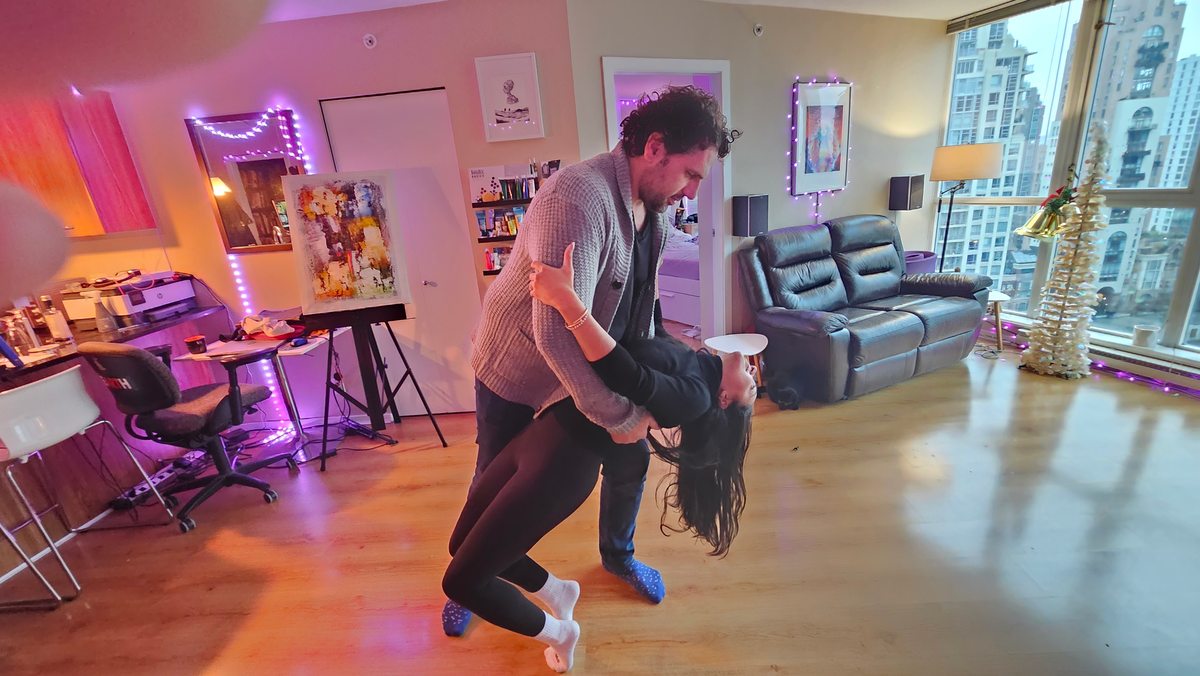
Learning With Dominic

A private lesson begins with the person or couple in the studio: what you want to learn, the music that draws you, and what starts happening once we dance.

Private Dance Lessons

Wedding First Dance

Contact Dominic

About Dominic Boyer

I started dancing when I was 10.

In Quebec, dancing was part of our life. At family gatherings, music was often in the room: folklore, jig, spoons, violin, singing and people dancing together. In some songs, the singer carries a line and the group responds. Voice, rhythm, hands, feet and bodies become part of the same shared moment.

That is one of the first places dance lived for me: in the room, in the music, in the people, in the call and response, and in the joy of moving together.

Long before I had formal names for technique, choreography, musicality, lead and follow, dance had already shown me music, connection, expression and aliveness.

Move • Connect • Come Alive.

Dominic Boyer, founder and private dance teacher at DBoyerDance

Dance Training and Teaching Experience

Dance continued through training, social dancing, performance, competition and teaching.

I began teaching around 2000. Early in my teaching career, I trained and worked as a dance teacher at a major dance school in Montréal, QC and Coquitlam, BC. That experience gave me structured teacher training in ballroom and partner dancing, alongside the daily practice of teaching people with different goals, bodies and ways of learning.

My development continued through private coaching, workshops, social dancing, performance, competition and years of teaching. I founded DBoyerDance in 2007.

Today, I teach private dance lessons and Wedding First Dance lessons in my Mount Pleasant studio in Vancouver.

Dominic Boyer and a partner performing together

Dance may look simple from the outside: a step, a turn, a rhythm, a pattern, a song. Inside the lesson, the student is learning weight shift, timing, balance, direction, memory and music. With a partner, attention also moves through invitation, response, connection and recovery when a movement changes.

Read more about how I teachShow less

Inside a Dance Lesson

No two students bring the same body, history, rhythm, instinct or way of learning. One student finds clarity through technical explanation. Another needs to see the shape, feel the movement, repeat it, use imagery, take on a stronger challenge, or have a quieter moment so the body can continue what it has started.

The route changes with the learning. I might demonstrate, count, simplify, exaggerate, use rhythm or imagery, separate two partner roles, or become very precise about weight, direction, timing, frame and transition.

I do not have the way. I have a way.

Every student brings a different way into the dance, so the route has to stay alive.

Dominic Boyer performing partner dance

“Not only is he a patient, engaging and truly encouraging teacher, but he has an amazing ability to add the physical movement and the social signaling necessary for a truly fluid partnership dance. … His knowledge of music to complement the dance experience is also an amazing gift.”

— Ian W.

When the Dance Settles in the Body

The mind may understand a movement before the body can dance it. Repetition turns a count or an idea into timing, ease and movement.

The body learns through experience: doing, adjusting, losing the movement, finding it again, hearing the music, feeling the partner, making mistakes and recovering. At first, effort helps create a reference. As the movement becomes familiar, the student no longer needs to hold every piece with the same effort.

That is one of the beautiful parts of teaching: watching movement travel from the head into the body until the student begins to dance it.

Mistakes sometimes give us gold. A turn changes shape or a transition opens another possibility. We keep it, play with it and let the student’s movement become part of the choreography.

A mistake is a creation in disguise. That is where the dancer becomes part of the painting with me.

Partner Dancing, Music and Choreography

Partner dancing is a conversation through the body. Information travels between two dancers through timing, tone, direction, weight, breath, attention and movement. The lead initiates and offers direction; the follow receives, responds, redirects and shapes what happens next.

When that exchange grows clearer, the dance feels less like two people remembering separate instructions and more like a language developing between them.

Music changes that language. Pulse, phrasing, accents, pauses, builds and releases give the movement places to breathe, soften, gather or expand. Choreography shapes those moments around the person, the couple, the song and the movements we discover together.

The result might be playful, romantic, elegant, dramatic, expressive or full of wow. When the choreography belongs to the people dancing it, it begins carrying something of them.

Dominic Boyer and a partner moving through choreography

“Dominic gave me a great tip on how to manage my core muscles when leaning and dipping in Tango that has really improved my dance and my connection with my partner! I was struggling and not understanding why the move wasn't working, and he worked with me until I got it!”

— Stacy H.

Presence, Connection and Transformation

Transformation is part of DBoyerDance because it happens through the dancing.

I see it in the way a person begins to move, listen and respond. A beginner starts to feel that dance is possible. A student hears more in the music and finds more expression in the body. Two partners discover greater clarity in the way they invite, receive and answer movement.

These moments grow inside the practice: movement, music, repetition, partner response, mistakes, laughter and discovery. They are not separate from technique. They appear as the technique becomes lived experience.

Move • Connect • Come Alive is not a straight line. Movement opens connection. Connection changes the movement. Presence gives expression more room. The dance continues moving through all three.

My Wider Background

Movement has been part of my life in more than one form. When I was younger, I practised martial arts and reached blue belt. Later, my studies included Reiki, meditation and Shiatsu massage therapy.

A large part of my path was shaped by l’Institut du Développement de la Personne—IDP—and the teaching of Annie Marquier. Over roughly ten active years, I participated in workshops, coaching, facilitator training, coordination, personal development and spiritual development through the institute.

That background informs how I observe, listen, guide movement and meet the person in front of me. A dance lesson remains grounded in dance: movement, music, technique, timing, choreography and partner connection.

Students have often told me, “Dominic, you are teaching way more than just dancing.” I understand why they say it. Dance works through the whole person who is learning it.

Portrait of Dominic Boyer
Dominic Boyer in an artistic dance performance

The Studio

DBoyerDance lessons take place in a private studio in Mount Pleasant, Vancouver, with one lesson at a time and the dance floor at the centre.

I want students to feel that the studio is their place too. From the moment we enter, I want it to feel like stepping into another world: a magical world where dance is expressed, the body wakes up, the soul has room to sing, and students can bring that energy home with them.

Music, movement, colour and attention create an atmosphere apart from the rest of the day. A lesson might move from technical detail into play, from repetition into laughter, or from a wrong turn into a discovery worth keeping.

Learning With Dominic

A private lesson begins with the person or couple in the studio: what you want to learn, the music that draws you, and what starts happening once we dance.

Private Dance Lessons

Wedding First Dance

Contact Dominic

About Dominic Boyer

I started dancing when I was 10.

In Quebec, dancing was part of our life. At family gatherings, music was often in the room: folklore, jig, spoons, violin, singing and people dancing together. In some songs, the singer carries a line and the group responds. Voice, rhythm, hands, feet and bodies become part of the same shared moment.

That is one of the first places dance lived for me: in the room, in the music, in the people, in the call and response, and in the joy of moving together.

Long before I had formal names for technique, choreography, musicality, lead and follow, dance had already shown me music, connection, expression and aliveness.

Move • Connect • Come Alive.

Dominic Boyer, founder and private dance teacher at DBoyerDance

Dance Training and Teaching Experience

Dance continued through training, social dancing, performance, competition and teaching.

I began teaching around 2000. Early in my teaching career, I trained and worked as a dance teacher at a major dance school in Montréal, QC and Coquitlam, BC. That experience gave me structured teacher training in ballroom and partner dancing, alongside the daily practice of teaching people with different goals, bodies and ways of learning.

My development continued through private coaching, workshops, social dancing, performance, competition and years of teaching. I founded DBoyerDance in 2007.

Today, I teach private dance lessons and Wedding First Dance lessons in my Mount Pleasant studio in Vancouver.

Dominic Boyer and a partner performing together

Dance may look simple from the outside: a step, a turn, a rhythm, a pattern, a song. Inside the lesson, the student is learning weight shift, timing, balance, direction, memory and music. With a partner, attention also moves through invitation, response, connection and recovery when a movement changes.

Read more about how I teachShow less

Inside a Dance Lesson

No two students bring the same body, history, rhythm, instinct or way of learning. One student finds clarity through technical explanation. Another needs to see the shape, feel the movement, repeat it, use imagery, take on a stronger challenge, or have a quieter moment so the body can continue what it has started.

The route changes with the learning. I might demonstrate, count, simplify, exaggerate, use rhythm or imagery, separate two partner roles, or become very precise about weight, direction, timing, frame and transition.

I do not have the way. I have a way.

Every student brings a different way into the dance, so the route has to stay alive.

Dominic Boyer performing partner dance

“Not only is he a patient, engaging and truly encouraging teacher, but he has an amazing ability to add the physical movement and the social signaling necessary for a truly fluid partnership dance. … His knowledge of music to complement the dance experience is also an amazing gift.”

— Ian W.

When the Dance Settles in the Body

The mind may understand a movement before the body can dance it. Repetition turns a count or an idea into timing, ease and movement.

The body learns through experience: doing, adjusting, losing the movement, finding it again, hearing the music, feeling the partner, making mistakes and recovering. At first, effort helps create a reference. As the movement becomes familiar, the student no longer needs to hold every piece with the same effort.

That is one of the beautiful parts of teaching: watching movement travel from the head into the body until the student begins to dance it.

Mistakes sometimes give us gold. A turn changes shape or a transition opens another possibility. We keep it, play with it and let the student’s movement become part of the choreography.

A mistake is a creation in disguise. That is where the dancer becomes part of the painting with me.

Partner Dancing, Music and Choreography

Partner dancing is a conversation through the body. Information travels between two dancers through timing, tone, direction, weight, breath, attention and movement. The lead initiates and offers direction; the follow receives, responds, redirects and shapes what happens next.

When that exchange grows clearer, the dance feels less like two people remembering separate instructions and more like a language developing between them.

Music changes that language. Pulse, phrasing, accents, pauses, builds and releases give the movement places to breathe, soften, gather or expand. Choreography shapes those moments around the person, the couple, the song and the movements we discover together.

The result might be playful, romantic, elegant, dramatic, expressive or full of wow. When the choreography belongs to the people dancing it, it begins carrying something of them.

Dominic Boyer and a partner moving through choreography

“Dominic gave me a great tip on how to manage my core muscles when leaning and dipping in Tango that has really improved my dance and my connection with my partner! I was struggling and not understanding why the move wasn't working, and he worked with me until I got it!”

— Stacy H.

Presence, Connection and Transformation

Transformation is part of DBoyerDance because it happens through the dancing.

I see it in the way a person begins to move, listen and respond. A beginner starts to feel that dance is possible. A student hears more in the music and finds more expression in the body. Two partners discover greater clarity in the way they invite, receive and answer movement.

These moments grow inside the practice: movement, music, repetition, partner response, mistakes, laughter and discovery. They are not separate from technique. They appear as the technique becomes lived experience.

Move • Connect • Come Alive is not a straight line. Movement opens connection. Connection changes the movement. Presence gives expression more room. The dance continues moving through all three.

My Wider Background

Movement has been part of my life in more than one form. When I was younger, I practised martial arts and reached blue belt. Later, my studies included Reiki, meditation and Shiatsu massage therapy.

A large part of my path was shaped by l’Institut du Développement de la Personne—IDP—and the teaching of Annie Marquier. Over roughly ten active years, I participated in workshops, coaching, facilitator training, coordination, personal development and spiritual development through the institute.

That background informs how I observe, listen, guide movement and meet the person in front of me. A dance lesson remains grounded in dance: movement, music, technique, timing, choreography and partner connection.

Students have often told me, “Dominic, you are teaching way more than just dancing.” I understand why they say it. Dance works through the whole person who is learning it.

Portrait of Dominic Boyer
Dominic Boyer in an artistic dance performance

The Studio

DBoyerDance lessons take place in a private studio in Mount Pleasant, Vancouver, with one lesson at a time and the dance floor at the centre.

I want students to feel that the studio is their place too. From the moment we enter, I want it to feel like stepping into another world: a magical world where dance is expressed, the body wakes up, the soul has room to sing, and students can bring that energy home with them.

Music, movement, colour and attention create an atmosphere apart from the rest of the day. A lesson might move from technical detail into play, from repetition into laughter, or from a wrong turn into a discovery worth keeping.

Learning With Dominic

A private lesson begins with the person or couple in the studio: what you want to learn, the music that draws you, and what starts happening once we dance.

Private Dance Lessons

Wedding First Dance

Contact Dominic